JSC Electrical · Based in Woburn Sands
EICR in Milton Keynes
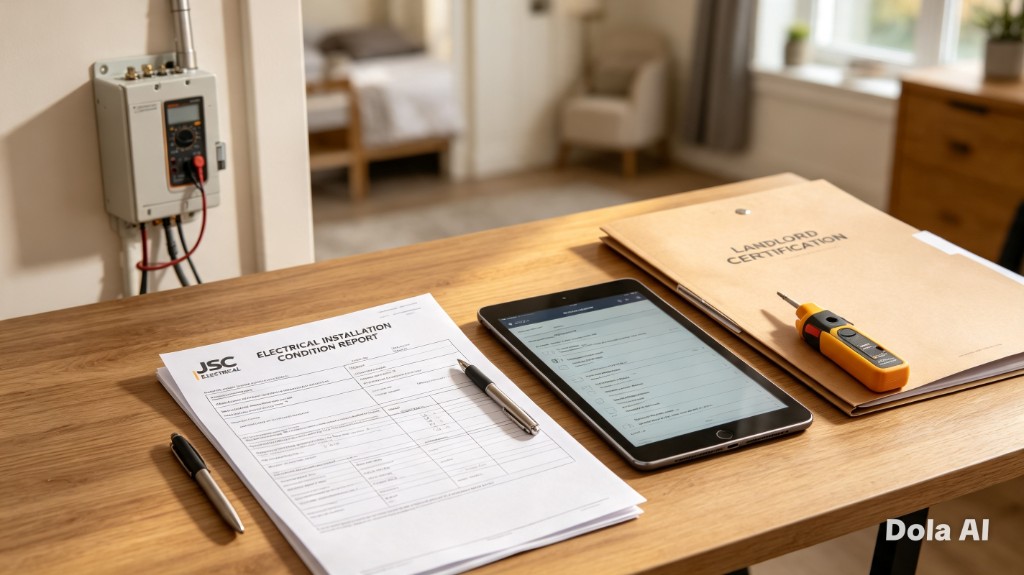
An EICR is an Electrical Installation Condition Report — a formal inspection and test of the fixed wiring in a home or rental property. JSC Electrical carries out electrical inspection and testing across Milton Keynes and nearby areas, with a clear report and a plain explanation of anything that needs attention.
Inspection & testing · Clear reports · Local and reliable
The basics
What is an EICR?
An Electrical Installation Condition Report assesses the condition and safety of an existing electrical installation. It is sometimes searched for as an electrical safety certificate, but the correct document for this type of check is an EICR — not an Electrical Installation Certificate used for new or altered work.
What inspection and testing looks for
Deterioration, damage, potentially dangerous defects, inadequate protection, earthing or bonding issues, faults that need further investigation, and departures from current safety requirements where those are relevant to the installation.
What it is not
An older installation does not automatically fail simply because it does not match every detail of the latest edition of BS 7671. The report focuses on condition and safety, with coded observations where something needs attention.
Who it is for
Who might need an EICR?
Homeowners in England do not have a blanket legal duty to obtain an EICR. It is still a useful check in many situations — and for many landlords it is a formal requirement.
Landlords and letting agents
Rental properties where electrical inspection and testing is required at regular intervals.
Homeowners
Anyone who wants a clear picture of the installation, especially if it has not been inspected for a long time.
Buyers
Useful when considering a property and wanting more detail about the electrics before completing.
Older installations or recurring problems
Where the installation is older, or where faults keep returning and a wider inspection is more useful than chasing individual symptoms. Related help is also available for electrical fault finding in Milton Keynes.
Rental properties
Landlord EICRs in England
Current GOV.UK guidance on electrical safety standards in the private and social rented sectors states that landlords must have the electrics in rented properties checked at least every five years by a properly qualified person, obtain a report, and give tenants proof of the inspection and testing as required.
At least every five years
Inspection and testing is required at regular intervals of no more than five years, or sooner if the most recent report requires an earlier date.
Report and copies
Landlords must obtain the report and provide copies to tenants and, where requested, the local authority, in line with the regulations. Check the official GOV.UK guidance for the current detail — this page is general information, not legal advice.
What JSC provides
A methodical EICR for the property, a clear written report, and a plain-English explanation of significant findings so you know what matters for safety and paperwork.
On the day
What happens during an EICR?
The visit is methodical and practical. An EICR covers a representative and appropriate extent of the installation — not every concealed cable or inaccessible item.
1. Discuss the installation
Property type, known issues, previous work, and any areas with limited access.
2. Visual inspection
Consumer unit, accessories and visible signs of damage, deterioration or inadequate protection.
3. Electrical testing
Safe, instrument-based testing of relevant circuits and protective measures.
4. Appropriate extent
A sample of the installation is inspected and tested in line with the agreed extent. Limitations are recorded where access or testing is not possible.
5. Observations and results
Findings and test results are recorded carefully for the report.
6. Report and explanation
You receive the EICR and a clear explanation of significant findings — without the jargon overload.
Furniture, floors and building fabric are not routinely opened up. If a specific area needs more invasive access, that is discussed first.
Report codes
EICR codes explained
Observations on an EICR are given classification codes. Understanding them helps you decide what needs doing next.
C1 — Danger present
Immediate risk. Action is needed to remove the danger.
C2 — Potentially dangerous
Urgent remedial work is required.
C3 — Improvement recommended
An improvement would be beneficial. A C3 recommendation does not itself make the EICR unsatisfactory, and it is not described as a failure.
FI — Further investigation required
Further investigation is required without delay.
C1 and C2 observations result in an unsatisfactory report. FI also needs prompt investigation. The report sets out what was found so you can plan the next step properly.
After the report
What if the EICR is unsatisfactory?
An unsatisfactory report does not automatically mean the property needs rewiring. It means one or more specific issues need remedial work or further investigation.
Clear explanation
Observations are explained in plain English so you know what is urgent and what is recommended.
Practical next steps
Where remedial work is suitable for JSC to carry out, options and pricing are discussed before anything starts. Not every item on every report can be completed by one contractor — that is said straight if something needs a different specialist.
Scope
What does an EICR check?
Typical areas covered on a domestic EICR include the items below. Testing is thorough within the agreed extent — it is not an exhaustive inspection of inaccessible wiring.
- Consumer unit
- Protective devices
- Earthing and bonding
- Socket circuits
- Lighting circuits
- Fixed wiring (as accessible)
- Polarity
- Insulation resistance
- Protective conductor continuity
- RCD protection
- Visible condition of accessories
- Signs of damage or deterioration
Why use JSC Electrical
Inspection and testing explained properly
Methodical testing
Inspection and testing is carried out carefully, with results recorded for a clear report.
Plain-English findings
Significant observations are explained so you understand what matters — not just a list of codes.
Practical advice
Next steps are discussed calmly, including where remedial work may be needed.
Local and tidy
Based in Woburn Sands, covering Milton Keynes and surrounding areas, with respectful work in customers' homes.
Guide prices for a typical 2–3 bedroom property start from £120, matching the figures already published on the site. Larger or more complex properties are quoted on the details.
Where I work
Areas covered
EICRs and electrical inspection are available across Milton Keynes and nearby towns and villages. There is no city-centre office — the business is based in Woburn Sands and travels to you.
- Milton Keynes
- Woburn Sands
- Bletchley
- Newport Pagnell
- Wavendon
- Aspley Guise
- Bow Brickhill
- Surrounding areas
Google reviews
Google reviews for JSC Electrical
Genuine Google reviews from local customers — useful when you want a clear, trustworthy EICR.
JSC Electrical
- Rated 5 out of 5 stars
View on GoogleJame’s from JSC Electrical installed a bathroom cabinet for us that needed to be connected to the mains and an extra electrical power socket in the kitchen. His work was exceptional, he was very thorough and left everything clean and tidy after he had finished. We will require more work in the near future and I won’t hesitate to get him back to do it.
- Rated 5 out of 5 stars
View on GoogleHad some outside lights replaced and also smoke alarms checked Clean and tidy work. Would highly recommend
- Rated 5 out of 5 stars
View on GoogleThis is the second time I have used JSC Electrical. Each time James has been very thorough and completes the job with care and professionalism. I have recommended JSC Electrical to my friends and family, who have had work done too. The jobs I have had done is an installation of a new plug, replacement of a new mirror vanity unit for a bathroom, outside light installed and LED lights on outside steps.


FAQs
Common questions about EICRs
What is an EICR?
An EICR is an Electrical Installation Condition Report. It is a formal inspection and test of the fixed electrical installation in a property, resulting in a written report of its condition and any observations that need attention.
How long does an EICR take?
It depends on the size of the property, the number of circuits, access and the condition of the installation. A straightforward flat or smaller house is often quicker than a larger property or one with restricted access. A realistic timescale is agreed when the job is booked rather than promising a fixed duration for every property.
How often does a landlord need an EICR?
In England, current GOV.UK guidance is that landlords must have electrical installations inspected and tested by a qualified person at least every five years, obtain a report, and provide copies as required. Always check the official GOV.UK guidance for the latest detail — this page is not legal advice.
Does an old consumer unit automatically fail an EICR?
Not automatically. An older consumer unit is assessed on its condition and whether it provides adequate protection for the installation. Age alone is not the same as a failure, though outdated or inadequate protection may lead to coded observations where justified.
What happens if my EICR is unsatisfactory?
An unsatisfactory report means one or more issues need remedial work or further investigation. It does not automatically mean a full rewire. The observations are explained in plain English, and suitable next steps can be discussed. Remedial work is quoted before it starts where JSC is asked to carry it out.
What do C1, C2 and C3 mean?
C1 means danger present. C2 means potentially dangerous. C3 means improvement recommended. FI means further investigation required without delay. C1 and C2 observations make the report unsatisfactory. FI also needs prompt investigation. C3 is a recommendation and does not by itself make the EICR unsatisfactory.
Do you have to test every socket?
An EICR inspects and tests a representative and appropriate extent of the installation. It is not usually an inspection of every concealed cable or inaccessible item. Limitations are recorded where access or testing is not possible or not agreed.
Can I stay in the property while the EICR is carried out?
Usually yes. Access to the consumer unit, sockets, lighting and other parts of the installation is needed. Furniture is not routinely dismantled, and building fabric is not opened up unless that has been agreed for a specific reason.
Will the power need to be turned off?
Parts of the testing typically require circuits to be isolated for periods. That is planned so disruption is kept practical. Exact arrangements depend on the property and what needs testing.
Is an EICR the same as an electrical safety certificate?
People often search for an electrical safety certificate when they mean an EICR. An EICR is specifically an Electrical Installation Condition Report for an existing installation. It is not the same document as an Electrical Installation Certificate, which relates to new or altered installation work.
Need an EICR in Milton Keynes?
Contact JSC Electrical to discuss your property and arrange an electrical inspection. Call, WhatsApp or request an EICR enquiry.